Skip to content

For UK charity shops and head offices only. WhatsApp first.

Start with a real valuer

How charity shop managers can spot a sovereign coin

A modest guide to early recognition without pretending certainty where it does not exist.

What should happen next? Use the primary action when this page already matches your decision stage. Use the secondary route when you need a more formal page, form, or internal review step before the charity acts.

1. Human view first

The route starts with a real UK valuer or a page-specific enquiry, not a blind parcel and not a generic contact form.

2. Evidence next

The next step should create something usable inside the charity: a scheduled session, a governance review pack, a pilot conversation, or a written valuation trail.

3. Decision stays with the charity

Nothing on this site removes the charity's control. The branch, head office, trustee, or finance lead still decides whether to proceed once the evidence is on the table.

WhatsApp valuation

07375 071158

Hours

Open 7 days a week, from 7am to 9pm

How charity shop managers can spot a sovereign coin
Governance rails

Registered charity bank account only. Written itemised valuation. Trustee-friendly PDF. Tracked return if declined.

Speed with discipline

Free same-day rough estimate before posting. Valuation within two hours on arrival. Same-day payment where cut-off rules are met.

Who this page is for

Written for the charity shop manager who needs a quick, head-office-safe route.

Service boundary

UK registered charity shops and their head offices only. The site is not written for the public or non-charity resellers.

Primary route

WhatsApp 07375 071158

Use this first for photo-led triage and same-day rough estimates.

Phone line

07763 741067

Use this when you need to talk through a branch, trustee, or pilot question.

What happens next

What a sensible first parcel looks like.

Step 1

Start with photographs on WhatsApp, or ring if the branch needs to talk through an unusual donation before anything is packed.

Step 2

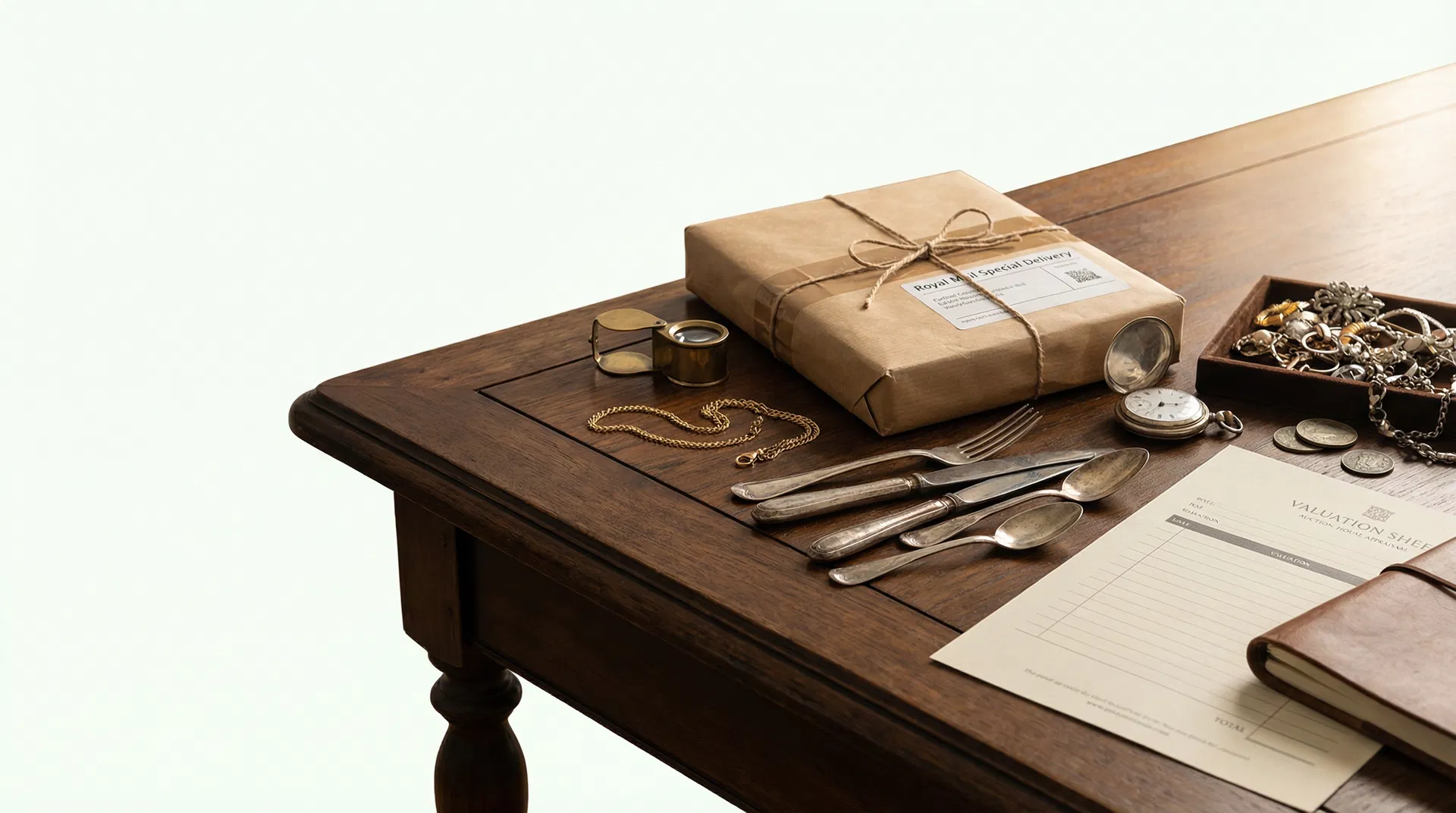
If the same-day rough estimate suggests specialist handling is justified, the prepaid Royal Mail Special Delivery label is issued next.

Step 3

When the parcel arrives, the written valuation comes before any acceptance decision, so the branch and head office can review the paperwork calmly.

Step 4

If the charity accepts, payment goes to the registered charity bank account only. If it declines, the return is free of charge, tracked and insured.

One-minute summary

What does a charity shop manager need to know before sending a first parcel?

This section is written for quick internal review. Each answer is self-contained so a branch manager, retail lead, or trustee can lift the essential points without having to decode the whole page first.

Start point

The first step is not posting. It is a free WhatsApp valuation from a real UK human, usually answered the same day during opening hours. We are open 7 days a week, from 7am to 9pm. That lets a branch test likely value before staff spend time packing, logging, or explaining the decision to head office.

Operational safety

If the estimate justifies specialist handling, Vintage Piggy issues a prepaid Royal Mail Special Delivery label with the £2,500 compensation uplift. The shop keeps the Post Office tracking reference, receives a written itemised valuation on arrival, and can still decline without being locked in.

Banking rule

Payment goes only to the charity’s registered bank account. It does not go to a personal account, shop till, or informal holding route. That matters because managers often need a process head office can approve without having to rewrite banking or audit controls.

What we buy

  • Gold (all carats, broken, scrap, dental, single earrings, chains, rings, coins)
  • Silver (hallmarked, 925, plate clearly marked, cutlery, tea services)
  • Platinum (900 and 950)
  • Costume jewellery in bulk, paid per kilo — mangled, tangled, rough, no sorting required
  • Watches — vintage, designer, modern, broken, pocket, movement-only, parts
  • Antiques
  • Lightweight antiques (smalls, treen, boxes, desk items)
  • Coins (UK and world, pre-decimal, bullion, numismatic)
  • Medals and militaria (ethical handling, war graves sensitivity, family significance return option)
  • Vintage cameras
  • Musical instruments
  • Silverware
  • Pottery and porcelain (Wedgwood, Doulton, Moorcroft, Clarice Cliff, Royal Worcester, Minton, Beswick, Troika)
  • Collectables

Question 1

Why does a sovereign coin deserve caution in a charity shop?

Because it is one of those objects that can look deceptively simple. A branch may see a small gold-coloured coin and assume novelty value or bullion scrap value without appreciating that age, type, condition, and authenticity can all influence the picture. The point is not to turn every manager into a numismatist. It is to make sure a coin that may matter does not vanish into a generic pricing decision before anyone has paused properly.

Question 2

What early signs should a manager notice first?

Notice size, colour, edge detail, portrait style, shield or reverse design, and any signs that the coin appears older or more deliberate than a generic medallion. If it came in with other coins, keep the group together for photographs. Even where the sovereign itself proves ordinary, the surrounding batch can change the story. The branch's task is to preserve clues, not to pronounce on final value from memory.

Question 3

How should a sovereign or possible sovereign be photographed?

Use clear close shots of both sides, the edge if possible, and the broader group if other coins came with it. Good light matters because worn detail can still be informative. If the branch has scales, a note can help, but the more important thing is clarity rather than a pile of approximate measurements. A sharp image will usually be more useful than a long written attempt to describe the portrait or legend.

Question 4

Why should a branch avoid cleaning or polishing the coin?

Because cleaning can alter the coin's surface and remove information that matters to collectors. Even when the coin ends up being valued mainly for bullion, unnecessary handling rarely helps. A charity trying to protect value should preserve the object as found, document it carefully, and move it into a specialist conversation early rather than treating presentation as the first priority.

Question 5

What is the simple operating rule with coins like this?

If a coin looks old, gold, unusual, or grouped with other interesting pieces, photograph it and ask before pricing. That rule is easier to teach than a full identification guide and far more likely to prevent avoidable underpricing in a busy branch setting.

Start with a real valuer

Send photos first. Post only if the estimate makes sense.

WhatsApp is the fastest route. If the estimate is right for your shop or head office, we then issue a prepaid Royal Mail Special Delivery label with the compensation uplift.

Before you act

Free same-day rough estimate before anything is posted.

Prepaid Royal Mail Special Delivery label when posting is appropriate.

Payment to the charity's registered bank account only, with return free of charge if declined.

If the question is head-office approval rather than branch confidence, send the Trust Centre and sample governance downloads internally before the parcel is packed.

Cookies: essential only unless you allow analytics.