Question 1
What is the first mistake charity shops make with donated jewellery?
They assume that condition tells the whole story. A broken clasp, a single earring, or an unattractive knot of chains can still contain precious metal value. Equally, a bright polished item can be almost worthless from a metal point of view. The first job is not to decide the final price. It is to separate obvious costume pieces from anything that deserves a closer look at marks, weight, construction, and overall feel.
Question 2
Which marks should staff look for first?
Start with the simplest visible clues. Hallmarks, fineness marks, carat numbers, and maker stamps are often the quickest indicators that a piece should not be priced casually. On gold, marks such as 9, 14, 18, 22, or 24 can be relevant. On silver, 925 and other purity indicators matter. The point is not to authenticate from memory. It is to notice that a mark exists and to capture it clearly in photographs.
Question 3
How can a branch photograph jewellery usefully for a first estimate?
Use steady light and a plain background. Photograph the whole item first, then close details of clasps, links, inner ring shanks, earrings backs, and any stamp or hallmark you can find. Grouping helps if the batch is mixed, but individual close-ups matter where a stronger piece may be hiding in a tangle. A photo that shows scale, construction, and the mark itself will usually save far more time than a long written description.
Question 4
Why is tangled costume jewellery worth talking about at all?
Because most buyers do not want it unless it has already been sorted. Charity shops often end up with drawers of broken brooches, snapped chains, bent earrings, and mixed odds that nobody wants to handle. Vintage Piggy treats that differently. An unsorted bulk batch can still justify attention and a per-kilo framework, which means value can be released from stock that would otherwise sit untouched for months.
Question 5
Where should a branch be cautious with jewellery that may have personal history?
Medallions, lockets, pieces with inscriptions, and items that seem linked to bereavement or family history should trigger a little more care. Commercial value is not the only question. If there is any indication that a donor or family member may wish to reclaim something or that the item has unusual emotional significance, the shop should slow down, record the concern, and make sure the escalation route reflects that sensitivity.
Question 6
What does a sensible next step look like once a piece seems promising?
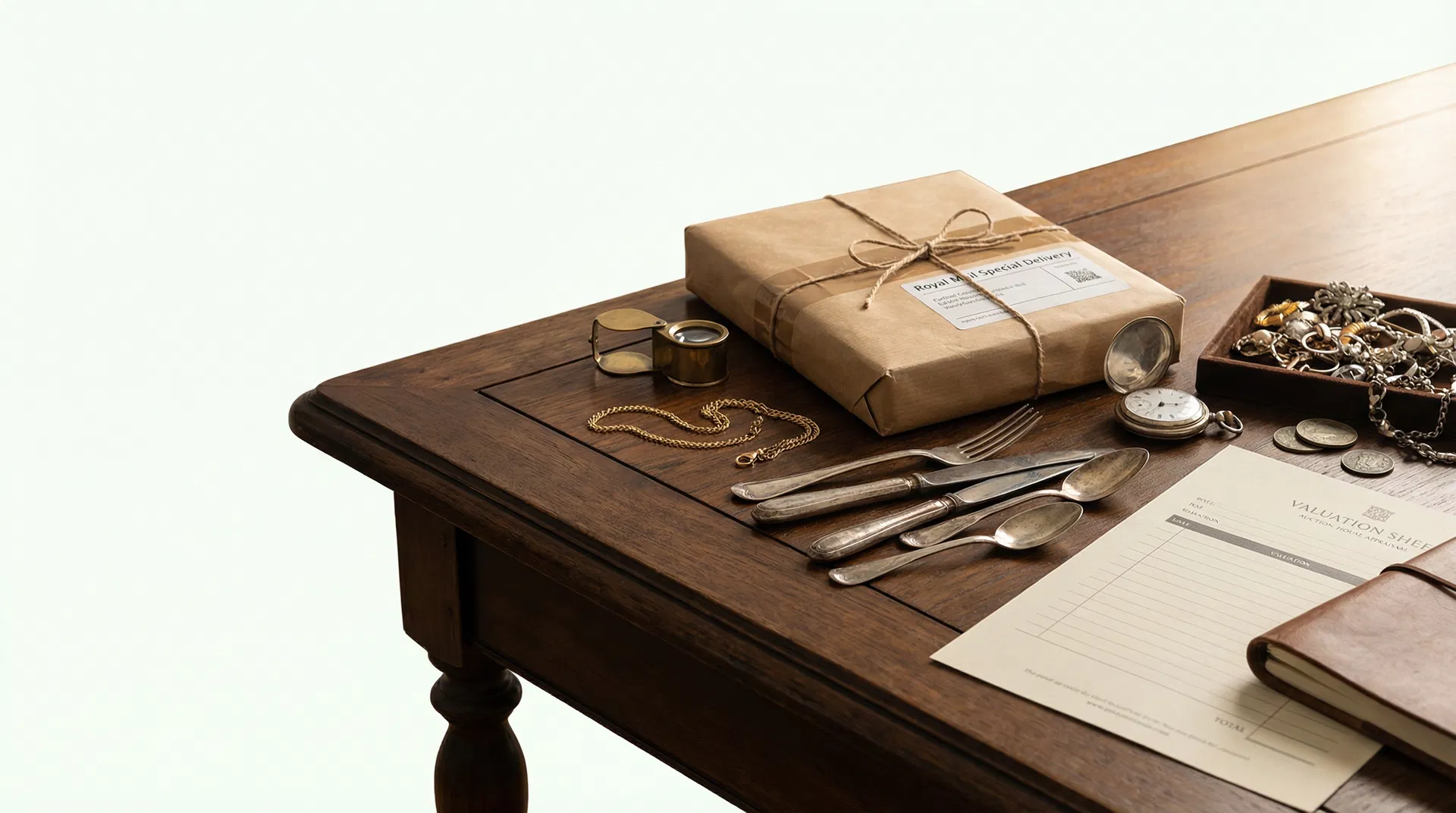
Do not guess at the sale value in branch. Send photographs on WhatsApp, note any marks, and ask for a same-day rough estimate. If the estimate suggests the specialist route is worthwhile, the next step is a prepaid Royal Mail Special Delivery label, not an improvised negotiation or cabinet price. That keeps the charity in a documented process from the start and avoids turning a potentially strong donation into an avoidable leak.